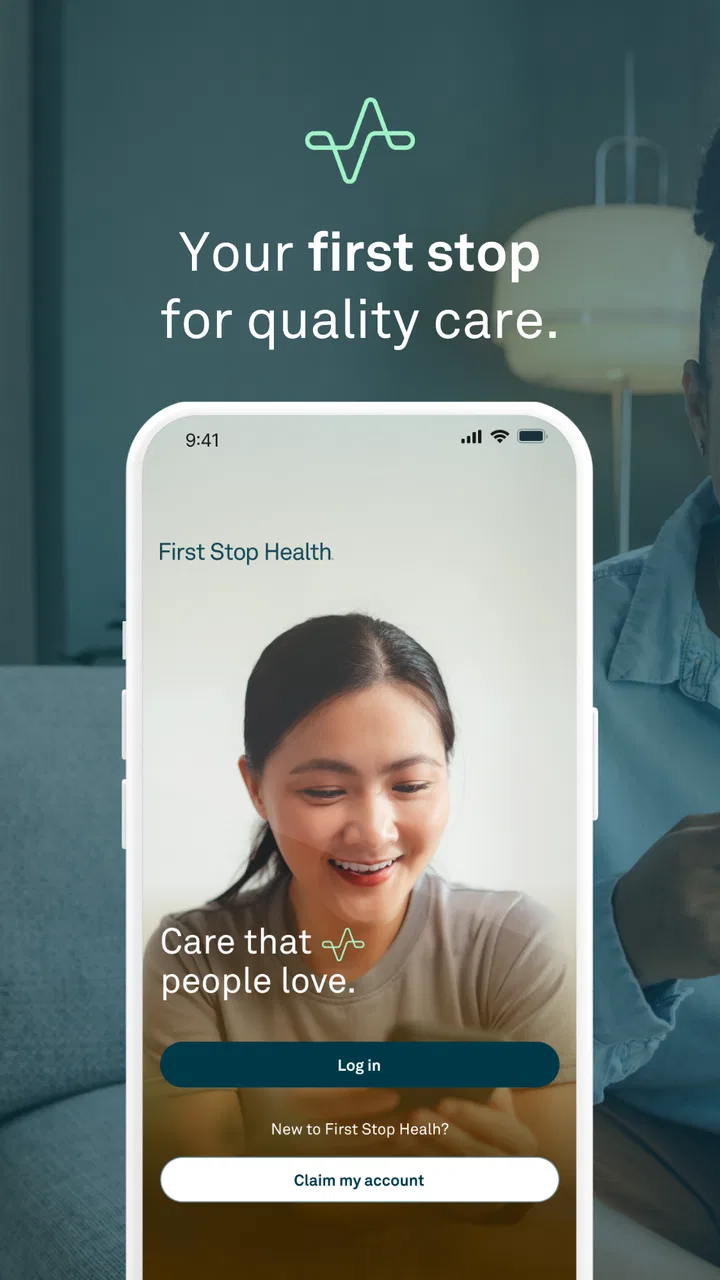
First Stop Health
- 4.8
- Rating
- 100.00K
- Installs
- Free
- Price

 Analysis by App-foxy
I find First Stop Health most useful when a minor health concern appears at an inconvenient time and I need a sensible first conversation rather than a rushed search through random medical websites. Developed by First Stop Health, this free medical app is built around access to a physician for non-emergency questions, diagnosis, and treatment guidance. That focus makes it easier to understand what it is—and what it is not—before deciding whether it belongs on your phone.
My overall impression is that it works best as a convenient first step. It can help you decide whether a symptom sounds suitable for remote medical attention, whether you should seek in-person care, or what to ask a clinician next. It is not a replacement for emergency services, a full hospital visit, or an ongoing relationship with a personal doctor. That distinction is important because the app’s value comes from speed and access, not from trying to handle every kind of medical situation.
How First Stop Health fits into everyday medical care
The app belongs to the medical category, but it feels more focused than a general health tracker. You are not opening it to count steps, record meals, or browse wellness articles. The central purpose is connecting with a physician around non-emergency health issues. In practical terms, that makes it relevant for questions that are important enough to deserve professional attention but do not appear to require an ambulance or an emergency department.
You May Also Like

 Google Keep - Notes and lists
Google Keep’s Quiet Growth Shows the Appeal of Simpler Notes
As mobile work gets busier, Google Keep keeps winning a simple contest: capture a thought quickly, find it later, and get on with the day.

 Blood Strike: 2.5 Anniversary
Blood Strike’s Loadouts Turn Every Drop Into a Tactical Gamble
A close look at Blood Strike’s custom loadouts: how fast access to signature weapons reshapes its battle royale rhythm, rewards preparation, and narrows the gap between fights.

 Pandora - Music & Podcasts
Pandora’s Music Is Easy to Start, but Harder to Recover
Pandora’s strength is its low-effort path from a seed to a station. Its weak spot is how much confidence it asks you to place in connection, setup, and quiet recovery.

 8 Ball Pool
 Is Built on Rivalries, Rematches, and Routine
A close look at the rivalries, rematches, shared routines, and unanswered safety questions that turn a quick pool match into a persistent mobile community.

 Samsung Music
’s Quiet Strength Is Playing What You Already Own
Its reach comes less from spectacle than from dependable access to a personal library. That simplicity is both the app’s strongest retention engine and its ceiling.

 AccuWeather: Weather Radar
AccuWeather Review: A Quick, Clear Forecast for Everyday Decisions
For everyday plans, the best forecast is the one you can understand quickly. AccuWeather makes rain timing, radar, and local conditions easy to act on, with a few trade-offs.
More From Our News Desk



I would think of it as a digital front door to medical advice. If I woke up with a new but manageable symptom, needed guidance about a common illness, or wanted help understanding what kind of care made sense, this is the sort of situation where the service could be useful. The physician consultation is the meaningful part; the app itself is the route into that conversation.
The service is available around the clock, which changes its usefulness compared with a traditional clinic schedule. A problem that appears late at night, during a weekend, or while traveling can be difficult to fit into ordinary office hours. Having a physician consultation available at any time can reduce the temptation to self-diagnose from search results or wait without knowing whether waiting is sensible.
That does not mean every late-night concern belongs here. Severe symptoms, rapidly worsening conditions, serious injuries, breathing difficulty, chest pain, signs of stroke, or any situation that feels immediately dangerous should be handled through emergency care. A remote consultation is valuable only when the situation is appropriate for it. Knowing when not to use the app is part of using it responsibly.
What the free price means in practice
First Stop Health is free to download and use as an app, so there is no purchase decision in the usual sense of comparing a subscription with a one-time fee. That makes the initial barrier low: someone can keep it available for a future need instead of deciding to pay before knowing whether telehealth fits their routine. The free access is the clearest part of its value proposition.
Still, I would not automatically interpret “free” as meaning that every possible medical service, treatment, or follow-up connected with a consultation has no cost. The app provides access to its service, while healthcare expenses can depend on the situation and the arrangements around care. Before relying on it for a specific treatment plan, I would check the terms that apply to my own healthcare coverage and understand whether prescriptions, tests, referrals, or in-person treatment are handled separately.
This is an important distinction when evaluating medical apps. A free download can provide convenient access without replacing the broader cost structure of healthcare. First Stop Health is attractive because I can try the consultation route without paying for the app itself, but I would still treat the medical advice as the beginning of a care decision rather than proof that every next step is free.
The app is rated for Everyone, which makes its presentation broadly accessible, but an age label should not be confused with clinical suitability for every person or condition. Parents and caregivers still need to use their judgment when seeking advice for a child, and anyone managing a complex condition should consider whether a physician who already knows their history would be a better choice.
Where the value is stronger than a web search
The biggest advantage is the move from information to conversation. Search engines can produce long lists of possible causes, many of them alarming and difficult to judge. A physician can ask follow-up questions, interpret the details in context, and explain what action makes sense. That human interaction is the reason I would choose this app over simply searching symptoms online.
It can also be more practical than waiting for a routine appointment when the issue is limited and time-sensitive but not dangerous. For example, imagine developing a persistent sore throat on a Sunday evening before an important workweek. I would want to know whether the symptoms justify testing, whether home care is reasonable, and whether I should arrange an in-person visit. A physician consultation could help organize those decisions instead of leaving me to guess from scattered articles.
Another useful scenario is uncertainty about the right level of care. People often hesitate between a primary-care appointment, urgent care, and emergency treatment. First Stop Health can serve as an initial conversation for suitable non-emergency cases, potentially helping a person understand whether remote advice is enough or whether an in-person evaluation should come next.
I also see value for people who have difficulty fitting a clinic visit into a normal day. Shift workers, caregivers, travelers, and anyone dealing with a minor issue outside office hours may appreciate access at a time when ordinary alternatives are inconvenient. The benefit is not just saving travel; it is reducing the delay between noticing a problem and speaking with a medical professional.
How to prepare for a better consultation
A small amount of preparation can make a remote consultation much more useful. Before starting, I would write down when the symptoms began, whether they are improving or worsening, what makes them better or worse, and any relevant medical history. I would also keep a list of current medicines and allergies nearby. This avoids spending the consultation trying to remember basic details.
I would describe the problem plainly rather than leading with a diagnosis. Saying “the pain started yesterday and gets worse when I swallow” gives a physician more useful information than saying “I think I have a particular infection.” Clear timing and changes in severity are especially important when the clinician cannot examine me in person.
A practical tip is to decide in advance what answer I need from the conversation. Am I trying to understand whether I need urgent care, what home steps are reasonable, whether a prescription might be appropriate, or what warning signs should trigger escalation? A focused question helps the consultation end with a clear plan rather than a vague impression.
I would also keep the consultation record, instructions, or recommended next steps available afterward if the app makes them accessible. That information can be useful if symptoms change or if I later need to explain the situation to another clinician. Remote care works best when the advice becomes an actionable plan, not just a reassuring conversation.
The tradeoffs of remote physician access
The main limitation is the same feature that makes the app convenient: the consultation happens remotely. A physician may not be able to perform a physical examination, measure every relevant vital sign, inspect a wound closely, or order immediate testing through the conversation itself. Some conditions that sound minor at first can only be assessed properly in person.
That means I would be cautious about using the app as the final answer for symptoms that persist, worsen, or do not fit the initial explanation. If the physician recommends an in-person visit, that recommendation should not be treated as a failure of the app. It is often the correct outcome of a remote screening conversation.
There is also a difference between convenience and continuity. A personal doctor may know my medical history, previous test results, long-term medicines, and recurring patterns. A remote physician can offer timely guidance, but the consultation may not provide the same depth of ongoing context. For a chronic condition, medication adjustment, or complicated history, my established care team may be the better primary option.
The app is similarly less suitable when the problem requires hands-on treatment. A remote physician may advise me about what to do next, but that does not eliminate the need for a clinic, laboratory, pharmacy, or hospital when the situation calls for one. I would use it to support a decision, not to force every medical problem into a digital format.
Another possible friction point is that the usefulness of the consultation depends on communication. If I cannot describe the symptoms clearly, provide an accurate history, or follow the recommended next step, the convenience may not translate into good care. This is why preparation matters more here than it might seem from a simple app description.
Who is most likely to get real value
I think First Stop Health is a strong fit for adults who want a readily available option for non-emergency concerns and who understand the boundary between remote advice and urgent medical care. It is particularly appealing to people who regularly face schedule problems, live far from a convenient clinic, or want professional guidance before deciding where to go next.
It may also suit households that prefer to have a medical consultation option ready before a minor issue appears. Installing a free app in advance is more practical than searching for a service while feeling unwell. I would still review the app when I am calm, make sure I know how to begin a consultation, and keep important health information accessible.
People who should probably skip it as their main medical resource include anyone experiencing an emergency, anyone needing a physical examination immediately, and anyone whose care depends heavily on detailed long-term records. It may also be a poor fit for someone who strongly prefers face-to-face care or who cannot reliably communicate symptoms through a remote consultation.
For children, older adults, or people with complex medical needs, the right choice depends heavily on the specific situation. The broad Everyone content rating does not remove the need for a responsible adult or established clinician when appropriate. I would use the app as an additional route to guidance, not as a reason to delay care from someone who already understands the patient’s history.
How it compares with ordinary alternatives
Compared with a symptom-search website, the app’s advantage is professional interaction and the possibility of a tailored response. Search tools are faster for basic background information, but they can encourage overthinking and cannot replace a physician’s judgment. I would use general web information to prepare questions, not to decide alone whether a worrying symptom is harmless.
Compared with calling a traditional clinic, First Stop Health offers more flexibility when the office is closed or appointments are unavailable. A clinic remains stronger when I need an examination, testing, continuity, or direct treatment. The choice is therefore less about finding one universal winner and more about matching the tool to the medical need.
Compared with an emergency department, the app is more appropriate for non-emergency concerns and less appropriate for dangerous or rapidly changing symptoms. The lower-friction route should never become a reason to postpone emergency care. If I am unsure whether a situation is truly urgent, I would favor immediate professional emergency guidance rather than waiting for a routine remote consultation.
Compared with a general wellness app, this service has a narrower and more practical purpose. It is not trying to replace fitness tracking or lifestyle coaching. Its value is concentrated in access to a physician, which is useful when I need medical direction rather than another dashboard of personal measurements.
What the app’s track record suggests
First Stop Health has been available since August 11, 2017, and its current version is 4.117.0. It supports Android 7.1 and later, so people using older compatible devices may still be able to access it. The service has passed one hundred thousand installs, and its average rating is 4.8 from 838 ratings, with 143 written reviews. Those figures suggest that many users have found the experience worthwhile, while the written feedback is still something I would read carefully for details about consultation flow and individual expectations.
I would not treat a high rating as proof that every consultation will be ideal. Medical needs vary widely, and satisfaction can depend on the time of day, the clarity of the symptoms, and whether remote care is suitable in the first place. The rating is encouraging, but the app’s real fit for me depends more on those practical conditions than on a number in an app store.
My buy-or-skip verdict
Because First Stop Health is free, my decision would not be based on whether the app is worth purchasing. I would install it if I wanted a convenient physician-access option for non-emergency questions and was comfortable treating remote care as one part of a larger healthcare plan. The strongest value is having that option available when normal clinic hours do not match real life.
I would skip it if I were looking for emergency treatment, comprehensive chronic-care management, guaranteed in-person diagnosis, or a replacement for a doctor who already knows my history. Those expectations go beyond what a remote consultation service should be asked to provide.
My recommendation is to keep First Stop Health as a practical backup for appropriate non-emergency concerns, not as a universal medical solution. Its free access, around-the-clock physician availability, and focused purpose make it easy to justify having on a compatible phone. The smartest way to use it is to prepare clear information, ask for specific next steps, follow escalation advice, and seek in-person or emergency care whenever the situation demands more than a remote conversation.
For me, that balance is what gives the app genuine value. It does not need to replace every healthcare option to be useful. It simply needs to make the first responsible step easier when a manageable health concern appears at an inconvenient moment.
FAQs for First Stop Health
01What is First Stop Health, and what services does it provide?
First Stop Health is a virtual healthcare service designed to help eligible members connect with medical professionals through their phone, tablet, or computer. Depending on the plan provided by an employer or health partner, users may receive virtual urgent care, primary care support, behavioral health services, or assistance finding appropriate care. Available features can vary by membership and location.
02How do I access First Stop Health and create an account?
To use First Stop Health, you generally need to be covered through a participating employer, organization, or health plan. After downloading the app or visiting the service website, you may be asked to enter personal details, verify your identity, and provide membership or employer information. Keep your enrollment details available, because access may not be available without an eligible benefit.
03Can I use First Stop Health for emergencies or serious medical conditions?
First Stop Health is intended for non-emergency healthcare needs and should not replace emergency services. If you are experiencing chest pain, severe breathing problems, uncontrolled bleeding, signs of a stroke, or another potentially life-threatening condition, call your local emergency number or go to the nearest emergency department. Virtual clinicians can help with many routine concerns, but they cannot handle every situation remotely.
04What types of appointments or health concerns can be handled through the app?
The service may support consultations for common, non-emergency issues such as colds, allergies, minor infections, skin concerns, medication questions, and general health guidance. Some plans may also include scheduled primary care or mental health appointments. The exact services, appointment availability, prescription options, and specialist referrals depend on your benefit package, state regulations, and the clinician’s assessment.
05Is First Stop Health free, and is my information kept private?
Whether First Stop Health is free depends on the coverage arranged by your employer or health plan. Some members may have no additional cost, while others could be responsible for a copay or another fee, so checking your benefits before starting a visit is important. Health information is handled under applicable privacy and security requirements, although users should review the service’s privacy policy for specific data practices.
Pros
- Virtual access to doctors
- therapists
- and health coaches in one app.
- Can help avoid unnecessary urgent-care or emergency-room visits.
- Appointment scheduling is convenient for eligible members.
- Telehealth may be useful when traveling or unable to leave home.
- Digital guidance can make basic healthcare easier to navigate.
Cons
- Access depends on your employer or health plan offering First Stop Health.
- Not suitable for emergencies or conditions requiring an in-person exam.
- Some services may have limited hours or longer waits during busy periods.
- Treatment options can be restricted without physical tests or diagnostics.
- Features and costs may vary significantly by membership plan.

First Stop Health
Gallery